Course Content
External Strategic Analysis
External Analysis, PEST, Porter’s Approach to Industry Analysis
0/3
Business Portfolio Analysis
Business Portfolio Analysis - BCG, GE Business Model, Ansoff’s Product Market Growth Matrix
0/4
Unit VI: Strategic Management

📊 BCG Matrix

I. Introduction

J. B. Barney

  1. The BCG Matrix, also known as the Boston Consulting Group Growth-Share Matrix, is a strategic management tool used by businesses to analyze their portfolio of products or business units.
  2. The BCG Matrix was developed by the Boston Consulting Group in the early 1970s.
  3. It is widely used for portfolio analysis and strategic planning.
  4. It helps organizations decide how to allocate resources among their various units based on market growth and market share.

II. ⚖️ Key Dimensions of Strategy
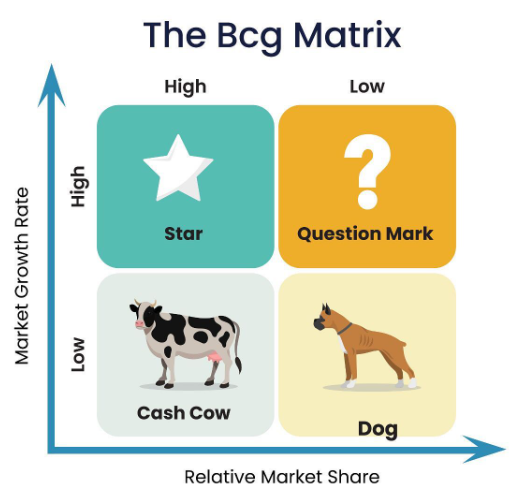
 

The matrix classifies business units or products into four categories based on two dimensions:


  1. 📈 Market Growth Rate (Vertical axis) – Measures the rate of growth of the market or industry. It indicates market attractiveness.

  2. 📊 Relative Market Share (Horizontal axis) – Measures the market share of the product/business relative to its largest competitor. It reflects competitive strength.


III. The 4 Quadrants of BCG Matrix

Quadrant Description Characteristics Strategic Focus
⭐ Stars High market growth + High market share Leaders in fast-growing markets, need investment Invest to maintain growth; may become cash cows
🐄 Cash Cows Low market growth + High market share Generate steady cash in mature markets “Milk” for cash to fund other units
❓ Question Marks High market growth + Low market share Operate in attractive markets but weak position Decide to invest or divest. Invest only if they can become Stars
🐕 Dogs Low market growth + Low market share Weak position in low-growth markets Divest or liquidate