📘 General Competitive Strategies: Michael Porter: 1985
I. Introduction

- Michael Porter, a renowned professor at Harvard Business School, introduced the General Competitive Strategies in his 1985 book Competitive Advantage.
- These strategies help businesses gain a competitive edge in the marketplace and focus on how a company can create and sustain competitive advantage.
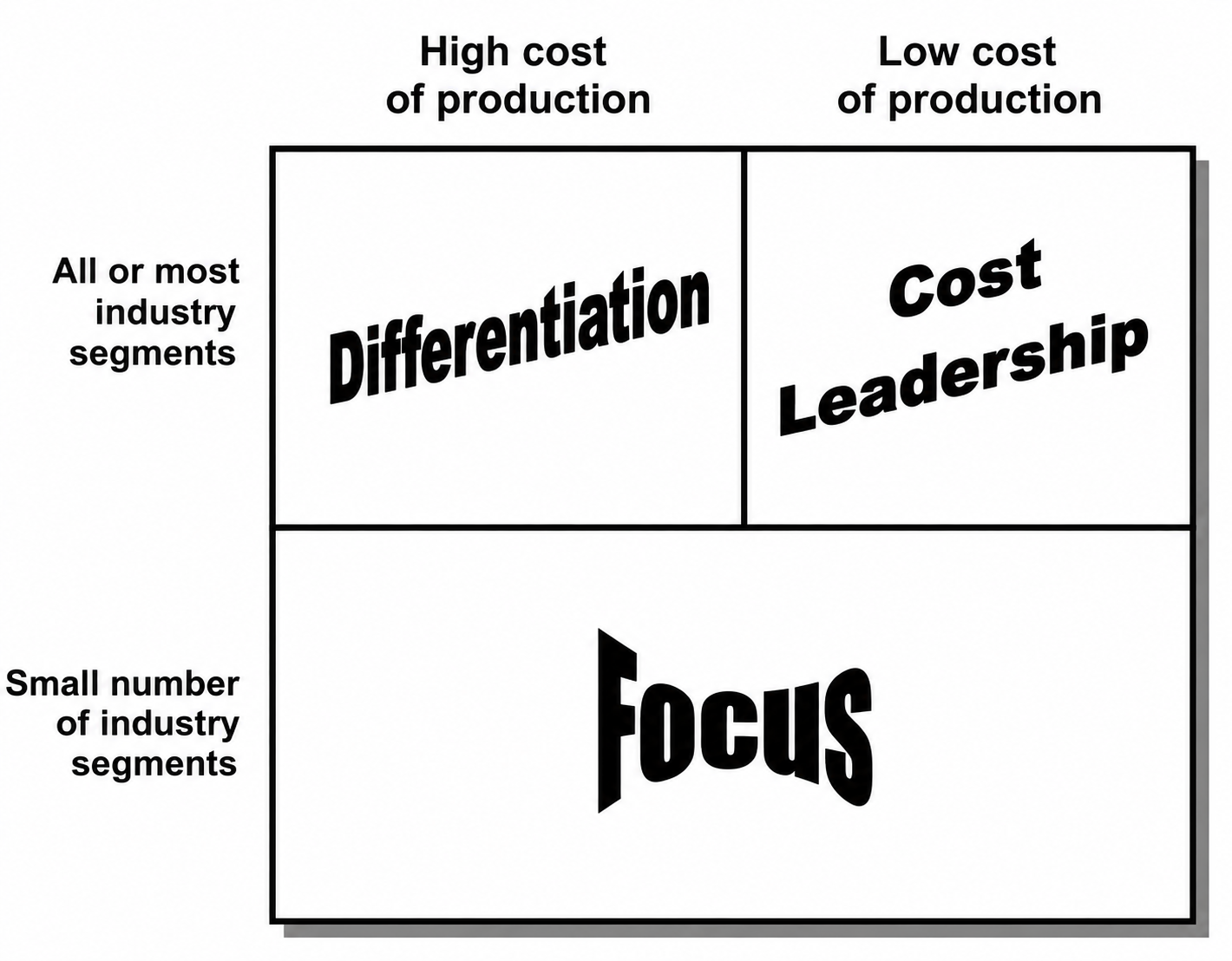
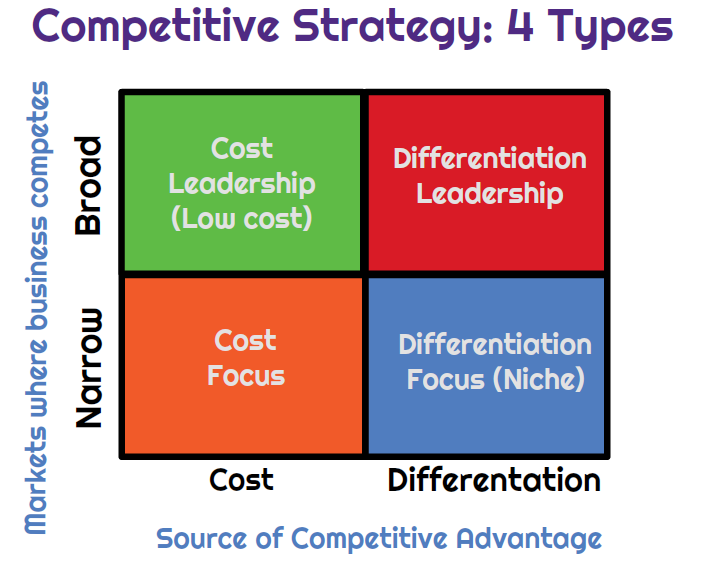
- Michael Porter’s Generic Competitive Strategies framework is traditionally defined as 3 (three), but is often expanded into 4 (four) distinct quadrants in practical applications.
II. 📊 Key Dimensions of Strategy
Porter’s Generic Strategies are based on two key dimensions:
-
🎯 Scope of the Market: Broad (industry-wide) or Narrow (focused/niche)
-
🧩 Source of Competitive Advantage: Cost (lower cost) or Differentiation (unique offering)
| The 3 Core Strategies (Original Concept) |
The 4 Quadrant Model (Expanded View) |
|---|---|
 |
 |
III. Risks Associated with General Competitive Strategy
According to Michael Porter, firms generally follow three generic competitive strategies: Cost Leadership, Differentiation, and Focus. Each strategy carries specific risks.
-
Risks of Cost Leadership Strategy: Cost leaders may face risks such as technological imitation, cost inflation, or competitors achieving lower costs through innovation.
-
Risks of Differentiation Strategy: Differentiation may fail if customer preferences change, price sensitivity increases, or competitors imitate unique features.
-
Risks of Focus Strategy: Focus strategies are risky if the niche segment disappears, broad-market firms invade the niche, or customer needs converge with the mass market.
-
Overall Risk: “Stuck in the Middle”: Michael Porter warned that firms trying to pursue all strategies simultaneously may become “stuck in the middle.”
This means:
- no clear competitive advantage,
- higher costs,
- weak market positioning,
- lower profitability.